The Sanctuary is a registered 501(c)(3) public charity.
At The Sanctuary, we believe that leadership is a sacred trust— an Amanah. Our stewardship team is comprised of globally recognized thought leaders and scholars dedicated to the preservation and ethical transmission of authentic wisdom. Together, they work to ensure this space remains a gentle refuge where science and soul are brought back into harmony.
Technology cannot see or hear the future, but the heart can see and hear the past, the present, and the future.
— Mawlana Shaykh Hisham Kabbani
Meet the team

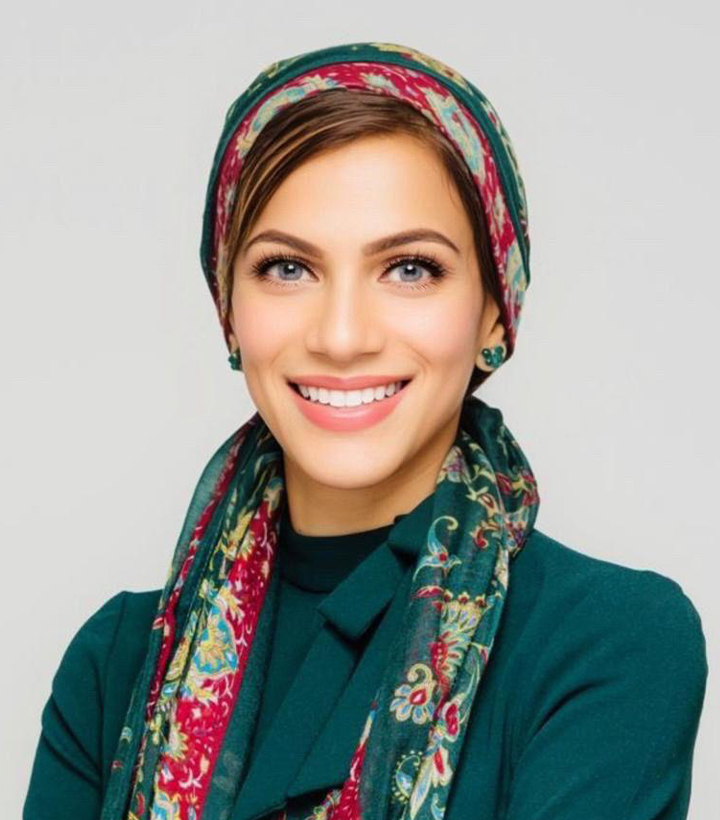
Dr. Maliha Hashmi
Chief Steward & Chief Executive Officer
Dr. Maliha Hashmi is an award-winning, globally recognized thought leader and system-builder shaping the future of health, wellness, and human well-being at the convergence of science, technology, ethics, law, business, creativity, and the inner life. Her work is grounded in a unifying belief that transcends borders and disciplines: that wellness is universal and interconnected—health for everyone, everywhere—and that true healing emerges when science and soul are brought back into harmony.
Recognized from an early age as a child prodigy, Dr. Hashmi’s journey has been defined by a rare ability to integrate vision with execution, intellect with empathy, and innovation with meaning. She holds doctorate and master’s degrees from Harvard, with additional advanced training at MIT, grounding her leadership in academic rigor, ethical reasoning, and systems thinking—while remaining deeply human, reflective, and spiritually anchored in its expression.
Consistently recognized for her global impact, Dr. Hashmi is ranked #1 among the Top 10 Female Innovators & Leaders Globally and named one of America’s Top 50 Most Influential Muslims for consecutive years. She is most recently ranked #6 among the Top Global Women Thought Leaders for 2025 by NBC Washington. She was officially titled as an Ambassador representing the United Nations Commission on the Status of Women (CSW) and presented with the Trailblazer Award for International Leadership at CSW69 in New York City as part of the 1001 UN Women Network. Across her career, she has delivered over 200 keynote addresses and high-level talks across more than 50 countries, engaging world leaders, governments, global institutions, academic bodies, legal and policy forums, and business leaders on the future of health, longevity, equity, sustainability, and human flourishing.
Her presence on the world stage—including the World Economic Forum (Davos), the United Nations, UNESCO, the G20 Presidency and V20 forums, and Harvard University—is marked not by performance, but by depth.
For Dr. Hashmi, longevity is not a luxury—it is a responsibility. The body is an amanah, a sacred trust. When people feel well, they treat others well. Healing oneself is the first act of service. Her life’s work is guided by a principle she lives by: “If we touch even one life, we prevent what might never be seen. That is the true intervention.”

Dr. Gibril Fouad Haddad
Resident Scholar
Shaykh Gibril Fouad Haddad was hailed in the inaugural edition of The 500 Most Influential Muslims in the World as “one of the clearest voices of traditional Islam in the West.”
Born in Beirut, Lebanon, he studied there, in the UK (he is an OKS), the US (where he took shahada in December 1991), France and Syria. He holds a doctorate in Hadith from Kolej Universiti Insaniah, Kedah Darul Aman, Malaysia, and a Ph.D. in French literature from Columbia University in New York. He holds scholarly licenses (ijāzas) from over 200 Shaykhs including Dr. Nur al-Din ʿItr, Dr. Muhammad ʿAlawi al-Maliki, Shaykh Saʿid al-Kaḥil, Shaykh Sulayman Ghawji al-Albani, Shaykh Muhammad Taysir al-Makhzumi, Qadi Muhammad Murshid Abidin, Shaykh Husayn ʿUsayran, Shaykh Salim Hammami and many others.
He won the State of Qatar’s Shaykh Hamad Award for Translation and International Understanding in 2017 for Ḥizb One of the Commentary on the Qur’an by al-Bayḍāwī, completed on a three-year appointment as a Senior Assistant Professor at Universiti Brunei Darussalam. He left academia the following year in order to complete what became Baydawi’s Complete Commentary of the Quran, the first-ever integral translation – in any language – of the most-studied tafsīr in Islamic civilization.
He has authored 50 books and hundreds of articles on Islamic hermeneutics, doctrine, Hadith, sufism,
scholarly biography, and heresiology, including The Four Imams and Their Schools (German and Malay translations), The Muhammadan Light (Bengali and Indonesian translations) and most recently:
- The Meanings of the Inimitable Quran, the first integral English translation of the Qurʾān to
document the ten canonical, mass-transmitted readings (qirā’āt or lections) according to the
highest scholarly standards. - Baydawi’s Complete Commentary of the Quran, currently being indexed, to be published in 2027
in sha Allah, in eight volumes totalling 3,600 pages, with over 14,000 footnotes. - The Sufi Answers to the ‘Salafi’ Calumnies on tawassul (using intermediacy and intercession to
God), tabarruk (getting blessings from holy people and relics), ziyāra (visitation of graves of the
pious), kashf (spiritual unveiling) and more. - The Lights of Guidance, a two-volume, 1,000-page translation of over 200 suhbas delivered in
Arabic by Shaykh Nazim al-Haqqani in Lebanon in the late 1970s and early 1980s. - Musnad of Ahl al-Bayt, an original Arabic-English compilation of 40 full-chained Hadiths of the
Prophet صلى الله عليه وسلم narrated from 40 of his contemporary descendants out of 40 Hadith books. - An annotated English translation of al-Nabhani’s The Prophet’s Knowledge of the Unseen
comprising over 700 fully-documented hadiths. - A bio-bibliographical overview of Sunni doctrinal history entitled The Maturidi School from
Abu Hanifa to al-Kawthari that was translated to Bosnian. - A study on Hadith, Sīra and ḥudūd (statutory penalties) entitled The Incineration of Persons in
Jihad, Criminal Penalties and Reprisals: A Critique of ISIS’s Argument in Light of the Sources,
whose launch was featured on Malaysia national TV.
A disciple of Shaykh Muhammad Nazim al-Haqqani (1922-2014) and Shaykh Muhammad Hisham Kabbani (1945-2024) in the Naqshbandi Tariqa since 1991, Shaykh Gibril was graced in 2010 with their handwritten signed ijāzas (authorizations) in Arabic, English and Bahasa Indonesia for irshād (giving guidance); conveyance of mawʿiẓa (admonishment); ṣuḥba (association); and dhikr (remembrance).